Companies That Changed Technology
Plus: Developer Culture & Programming. Twenty stories about platforms, communities and code.
An illustrated issue in two parts, with all twenty stories, editorial takeaways and source notes.
Part one: Apple, NVIDIA, Google, Linux, Microsoft, BlackBerry, Nokia, WhatsApp, OpenAI and Indian startups.
Part two: Linux for developers, Rust, Git, VS Code, Neovim, compilation, operating systems, AI coding agents, open source and building an OS.
Issue 01 connects ten stories of technology platforms with ten explorations of developer culture and programming. Includes original illustrations, practical takeaways and linked primary sources.
Inside this issue
- The systems that changed us.
- A note from the editor
- Inside / Part one
- Inside / Part two
- Part one / The platforms
- How Apple Changed Personal Computing
- How Apple Changed Personal Computing / The takeaway
- The Rise of NVIDIA
- The Rise of NVIDIA / The takeaway
- How Google Became the Internet's Gateway
- How Google Became the Internet's Gateway / The takeaway
- The Story Behind Linux
- The Story Behind Linux / The takeaway
- How Microsoft Lost and Regained Its Position
- How Microsoft Lost and Regained Its Position / The takeaway
- Why BlackBerry Failed
- Why BlackBerry Failed / The takeaway
- The Rise and Fall of Nokia
- The Rise and Fall of Nokia / The takeaway
- How WhatsApp Became a Global Communication Platform
- How WhatsApp Became a Global Communication Platform / The takeaway
- The Story of OpenAI
- The Story of OpenAI / The takeaway
- How Indian Startups Are Changing Technology
- How Indian Startups Are Changing Technology / The takeaway
- Part two / The workshop
- Why Do Developers Love Linux?
- Why Do Developers Love Linux? / The takeaway
- What Makes Rust Different?
- What Makes Rust Different? / The takeaway
- How Git Actually Works
- How Git Actually Works / The takeaway
- The Story Behind VS Code
- The Story Behind VS Code / The takeaway
- Why Developers Are Switching to Neovim
- Why Developers Are Switching to Neovim / The takeaway
- What Happens When You Compile Code?
- What Happens When You Compile Code? / The takeaway
- How Operating Systems Work
- How Operating Systems Work / The takeaway
- The Rise of AI Coding Agents
- The Rise of AI Coding Agents / The takeaway
- Why Open Source Software Matters
- Why Open Source Software Matters / The takeaway
- Can You Build an Operating System From Scratch?
- Can You Build an Operating System From Scratch? / The takeaway
- Source desk / Platforms
- Source desk / The workshop
The systems that changed us.
Companies That Changed Technology
Developer Culture & Programming
Issue 01 · October 2026 · 20 stories · 48 pages
A note from the editor
Technology changes through companies, communities and the people who learn to build. This issue looks at all three. The first half follows platforms that altered how we use computers. The second opens the workshop: languages, editors, operating systems and the habits behind software.
Each story has two pages: a historical or technical explanation, followed by an editorial takeaway or an experiment. The takeaways are our interpretations, not claims that one event explains every outcome.
Linux is deliberately included among the organisations and platforms, although it is not a company. Similarly, the phone-platform stories do not imply that BlackBerry or Nokia ceased to exist.
Research reviewed on 27 October 2026. All artwork in this issue is original conceptual illustration, not a product photograph, screenshot or official brand asset. Primary sources and further reading appear beside stories and at the back.
Inside / Part one
Companies That Changed Technology
06–07 / How Apple Changed Personal Computing
08–09 / The Rise of NVIDIA
10–11 / How Google Became the Internet's Gateway
12–13 / The Story Behind Linux
14–15 / How Microsoft Lost and Regained Its Position
16–17 / Why BlackBerry Failed
18–19 / The Rise and Fall of Nokia
20–21 / How WhatsApp Became a Global Communication Platform
22–23 / The Story of OpenAI
24–25 / How Indian Startups Are Changing Technology
Inside / Part two
Developer Culture & Programming
27–28 / Why Do Developers Love Linux?
29–30 / What Makes Rust Different?
31–32 / How Git Actually Works
33–34 / The Story Behind VS Code
35–36 / Why Developers Are Switching to Neovim
37–38 / What Happens When You Compile Code?
39–40 / How Operating Systems Work
41–42 / The Rise of AI Coding Agents
43–44 / Why Open Source Software Matters
45–46 / Can You Build an Operating System From Scratch?
Part one / The platforms
Companies That Changed Technology
Ten stories about interfaces, ecosystems and the work around an invention. Ask what each platform made easier—and what assumptions stopped working.
How Apple Changed Personal Computing
An interface people could explore
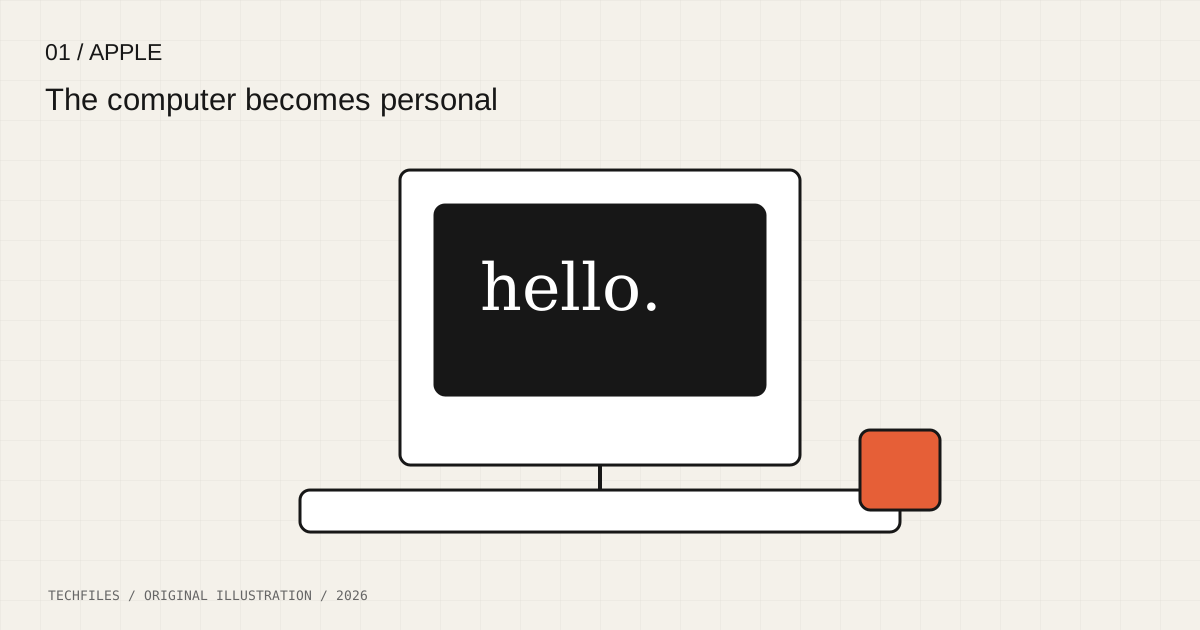
The Macintosh, introduced in January 1984, made a compelling argument about who a computer could be for. Windows, icons and a mouse offered a way to explore a machine through visible objects rather than memorised command syntax. Apple did not invent the graphical interface: earlier research and systems, including work at Xerox PARC, supplied crucial ideas. The achievement was the way hardware, software, typography and presentation were brought into one recognisable product.
That distinction matters. Technology history becomes less useful when every successful product is described as an invention from nowhere. The Macintosh story is also a story about translating research into an experience that people can learn. A limited machine can change expectations when its interaction model is convincing.
How Apple Changed Personal Computing / The takeaway
Personal computing is not only a question of processor speed. It is also a question of feedback: can someone discover what is possible, understand what happened and recover from a mistake? A visible desktop gave those questions a vocabulary.
The editorial lesson is to look for the work around an invention. Packaging, defaults, documentation and an understandable first five minutes can determine whether a capability becomes useful outside its original community. Elegant presentation cannot compensate for every limitation, but it can make a new kind of interaction legible.
Try this: compare a command-line file operation with a graphical one. Which teaches the operation better? Which is easier to repeat? The answer may change with the user's experience. Good tools leave room for both.
Read the source
The Rise of NVIDIA
A graphics business becomes a computing platform
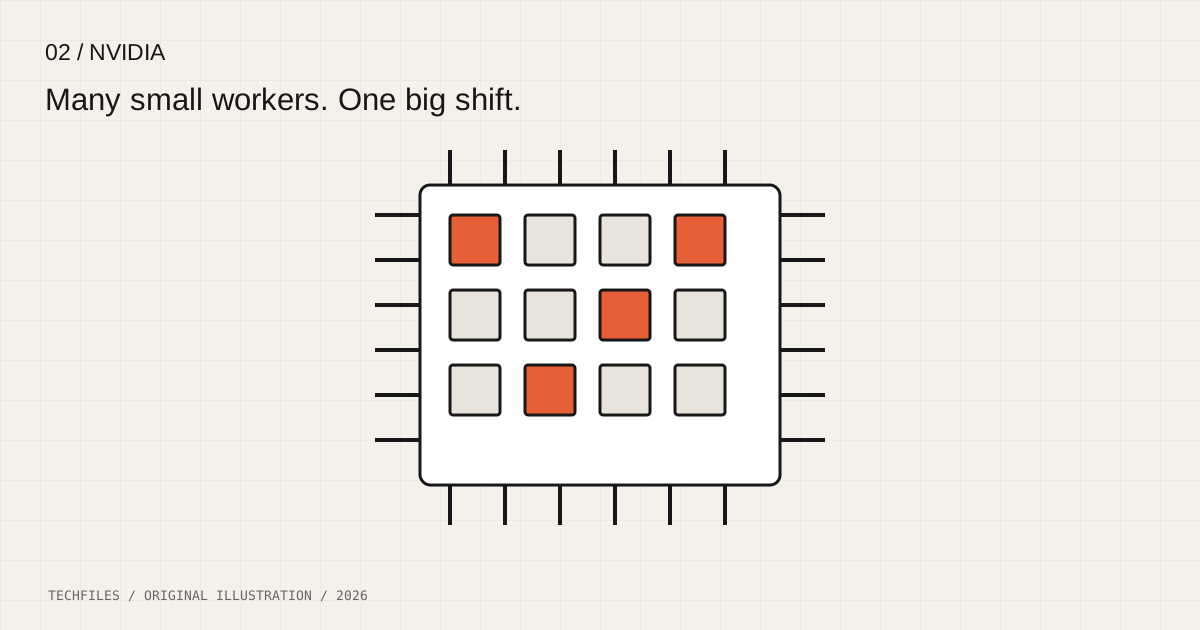
NVIDIA began in 1993 with a focus on graphics. Its later importance is easier to understand as a platform story than as a sequence of faster chips. GPUs perform many operations in parallel, a useful match for graphics and, for suitable workloads, scientific computing and machine learning. CUDA, unveiled in 2006, gave developers a way to program that capability beyond drawing pixels.
The company's timeline connects CUDA with the later deep-learning breakthrough associated with AlexNet in 2012. The transition was not that graphics suddenly stopped mattering. An existing approach to computation found important new uses, supported by tools and a growing software ecosystem.
The Rise of NVIDIA / The takeaway
A fast component is valuable. A component that developers can repeatedly use, debug and integrate can become infrastructure. Libraries, documentation and skills make hardware investment more usable; they also raise the cost of switching to a different platform.
This is our interpretation of NVIDIA's rise: the durable advantage is not exhausted by a chip specification. The surrounding development experience helps turn parallel hardware into a practical choice. That does not mean a GPU is the best answer to every problem. Data movement, memory limits, programming effort and the shape of the workload still matter.
For a developer, the useful question is smaller than the market narrative: does this task contain enough suitable parallel work to justify the extra complexity? Begin with a measured bottleneck, not with a fashionable component.
Read the source
How Google Became the Internet's Gateway
A simple question at the entrance to a huge system
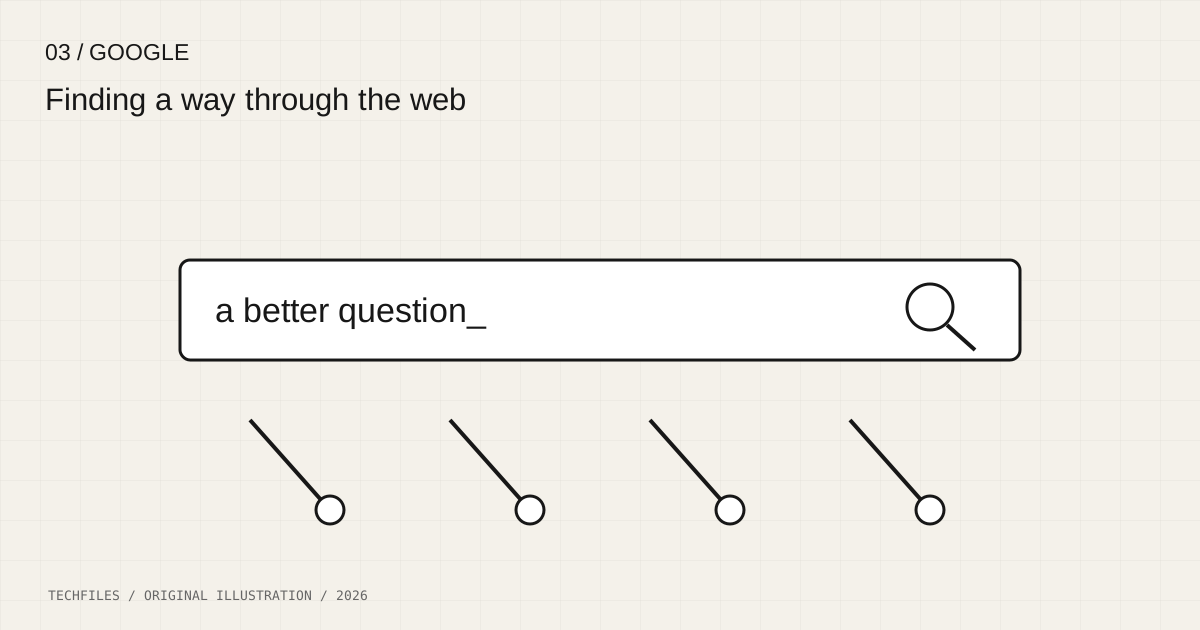
Google's own history begins with Larry Page and Sergey Brin at Stanford. Their early search project, Backrub, used links between web pages as evidence of importance. The company followed in 1998. A plain search box offered an unusually direct promise: describe what you need and receive a useful route through the web.
Search did not merely organise information already inside one application. It stood between people and a rapidly expanding collection of independent sites. That position made ranking consequential. A result near the top could shape what people read, which businesses they discovered and which explanations they encountered first.
How Google Became the Internet's Gateway / The takeaway
The gateway metaphor is useful, but incomplete. People also reach information through direct links, communities, apps and other search products. Google's historical importance should not erase those routes or imply that one ranking is the same as the web itself.
Our reading of this story is about the power of reducing a difficult task to one approachable interaction. The box is small; the systems and judgments behind it are not. Convenience can conceal decisions about relevance, quality and commercial incentives.
A practical habit follows: when a result matters, inspect the source rather than only the snippet. Try a second formulation of the question. Search is an excellent starting point for investigation, but the destination should still be evaluated on its own merits.
Read the source
The Story Behind Linux
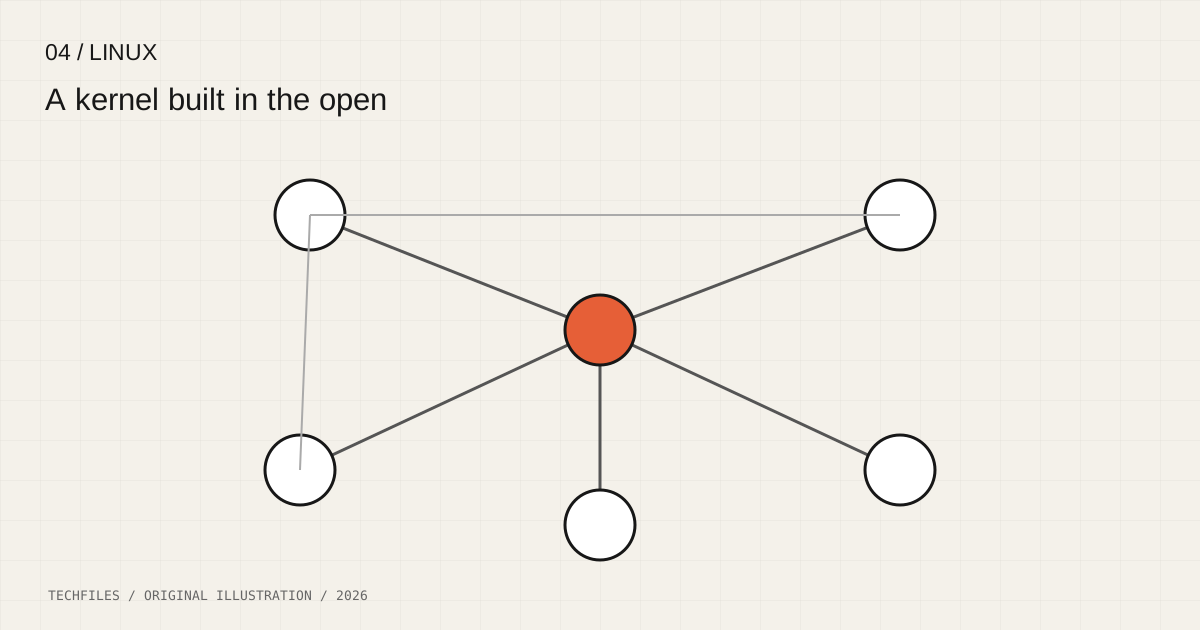
The company-sized exception in this section
Linux belongs in a history of technology-changing organisations even though it is not a company. Linus Torvalds began the kernel in 1991. A kernel is the central component that manages hardware and provides services to programs; a complete Linux-based system also includes many other tools and components, including important contributions from the GNU project and other communities.
The kernel's licensing and collaborative development made a different kind of growth possible. Organisations with competing commercial interests could still contribute to shared infrastructure. That cooperation does not eliminate disagreements or maintenance costs. It gives them a common place to be worked through.
The Story Behind Linux / The takeaway
It is tempting to tell open-source history as a lone programmer defeating a corporation. Linux offers a more demanding lesson: an enduring shared system needs review, maintainers, release practices and people willing to work on unglamorous details.
A licence gives permission to participate; participation still takes effort. Documentation, bug reproduction and careful review are part of engineering rather than secondary activities around it. A project becomes infrastructure when others can depend on its habits as well as its code.
To understand the model, read a small patch discussion in a project you use. Notice the questions about compatibility and edge cases. The visible change may be tiny, while the reasoning explains why a widely shared system can keep evolving without treating every release as a fresh start.
Read the source
How Microsoft Lost and Regained Its Position
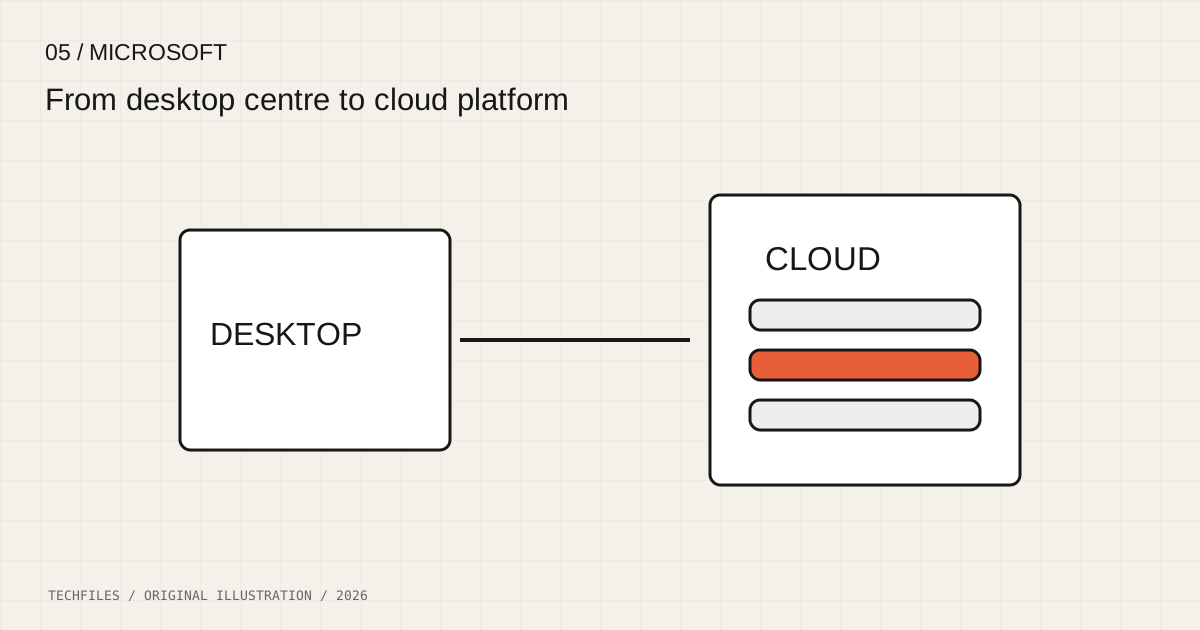
A missed shift, then a different centre of gravity
The title needs a qualification: Microsoft did not simply disappear and return. Its desktop and enterprise businesses remained important while its phone ambitions struggled. The completion of its Nokia Devices and Services acquisition in 2014 captures the scale of its mobile bet. Later annual reporting describes a business spanning productivity, cloud services and personal computing.
The more useful story is about changing the centre of gravity. A company strongly associated with Windows could build services that mattered on devices and operating systems it did not control. A missed platform transition did not erase its existing customers, distribution or engineering capacity.
How Microsoft Lost and Regained Its Position / The takeaway
Calling this a comeback is an editorial shorthand, not a claim that every Microsoft business recovered equally. Cloud subscriptions and developer services solve different problems from selling a phone operating system. Each has its own competition and dependencies.
For builders, the interesting question is whether a product's identity is tied too tightly to one delivery method. A useful capability may survive a change from installed software to an online service if the team understands the customer problem beneath the packaging.
That adaptation is not free. It can require new incentives, operational skills and compatibility choices. When assessing a technology company, separate the strength of a familiar brand from the usefulness of its current products. Both can matter, but neither is a substitute for examining the actual work customers are trying to do.
Read the source
Why BlackBerry Failed
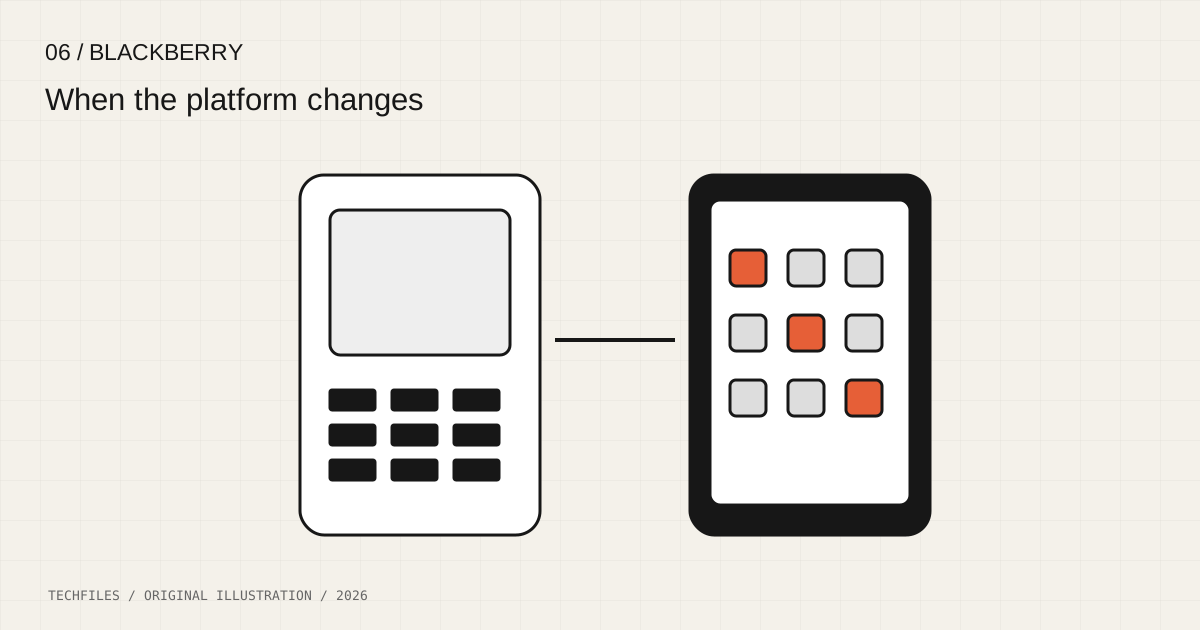
The phone platform, not the whole company
BlackBerry's phone story is often reduced to a keyboard versus a touchscreen. That is too narrow. A smartphone is also a software platform: people choose applications, services and familiar workflows alongside the physical device. An interaction model that served one era can become a constraint when expectations move.
BlackBerry's end-of-life notice provides a concrete endpoint for its legacy phone services: 4 January 2022. It covers older BlackBerry operating systems and associated services, not every later Android-branded device. The notice should not be confused with a declaration that the entire company ceased to exist.
Why BlackBerry Failed / The takeaway
Our explanation is a platform-transition argument, not a single-cause verdict. Product decisions, timing, execution and the strength of competing ecosystems interact. A beloved feature can remain excellent while the surrounding product becomes less compelling.
The difficult lesson is that customer loyalty is often loyalty to a solved problem, not to a permanent implementation. Fast messaging once made the keyboard feel essential. When the phone became a general-purpose pocket computer, the range of possible tasks widened.
For a small software team, the corresponding warning is practical: do not measure only whether existing users still praise the strongest feature. Ask what prospective users cannot accomplish. A product can become very good at protecting its past while its next audience quietly chooses a different platform.
Read the source
The Rise and Fall of Nokia
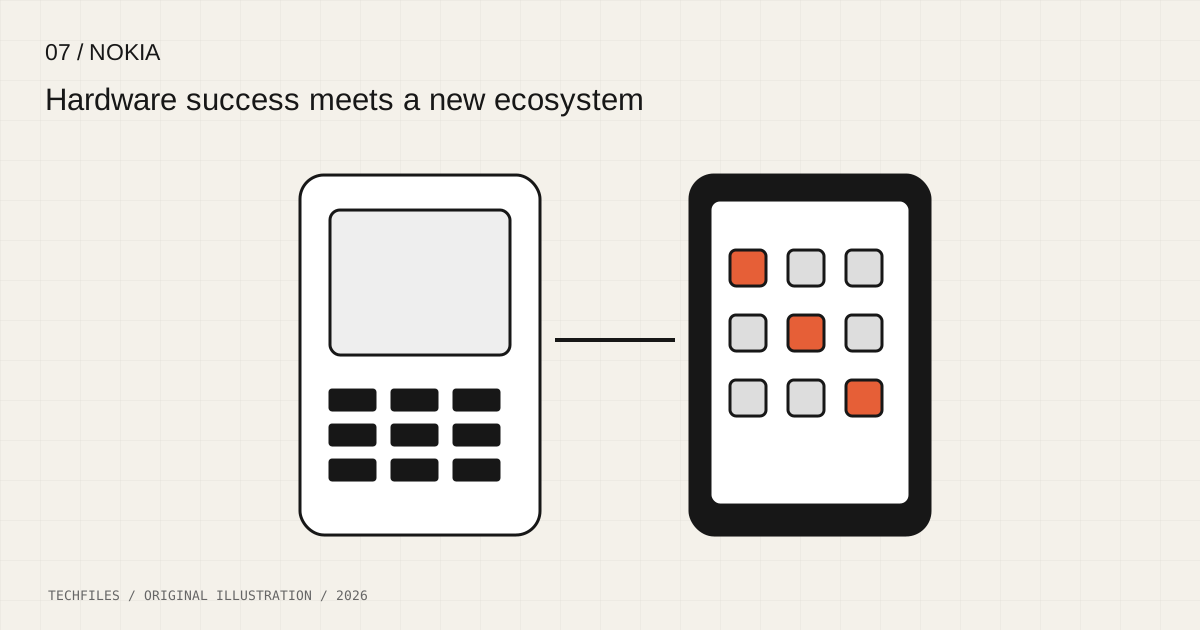
A handset era ends; the company continues
Nokia's history reaches back well before mobile phones. Its rise as a handset maker became one of technology's most recognisable success stories, but the smartphone transition changed what a phone business needed to deliver. Hardware quality was only one part of an increasingly software-led ecosystem.
On 25 April 2014, Nokia completed the sale of substantially all its Devices and Services business to Microsoft. That is a clearer historical marker than a vague statement that Nokia died. Nokia's own reporting describes the businesses that continued after the transaction, including networks and technology licensing.
The Rise and Fall of Nokia / The takeaway
The rise-and-fall framing works only if its subject is the dominant handset position. It should not collapse a changing corporation into a discontinued consumer identity. Distinguishing a business unit, a brand and a company makes technology history more accurate.
The editorial lesson resembles BlackBerry's, but the paths are not interchangeable. Different organisations face different combinations of software transitions, management decisions and ecosystem competition. A tidy morality tale may be memorable while explaining very little.
For builders, ask which assumptions your product inherits from the environment around it. What changes if distribution, input methods or third-party expectations change? Test one of those assumptions before it becomes a crisis. The quality of yesterday's execution does not guarantee that tomorrow's problem will remain the same.
Read the source
How WhatsApp Became a Global Communication Platform
The value of being where your people are
A messaging application becomes more useful when the people you need to reach also use it. WhatsApp illustrates how a narrowly understood job—send a message to someone you know—can expand into everyday infrastructure for families, classrooms and organisations. Its product significance is not explained by a feature list alone. Familiarity and the reach of a contact network are part of the experience.
Meta's engineering documentation identifies the rollout of end-to-end encryption in 2016 and describes the Signal Protocol as a foundational element. Encryption protects message content between participating endpoints; it is not a promise that every surrounding activity, device or business interaction is invisible.
How WhatsApp Became a Global Communication Platform / The takeaway
The same convenience that makes a messenger useful can make it difficult to leave. A group does not migrate merely because one person discovers an alternative. Product adoption is often a coordination problem.
Our interpretation is that communication software should be assessed as a shared space, not only as an individual tool. Clear group controls, understandable identity and reliable delivery matter because other people are involved in every action.
For readers, a modest habit helps: check the recipient and group context before sending something sensitive. Encrypted transport cannot stop an intended recipient from forwarding or photographing a message. A useful security model includes people and devices as well as a cryptographic protocol. Convenience is valuable; understanding its boundaries makes it safer to rely on.
Read the source
Meta Engineering: WhatsApp and privacy-preserving measurement
The Story of OpenAI
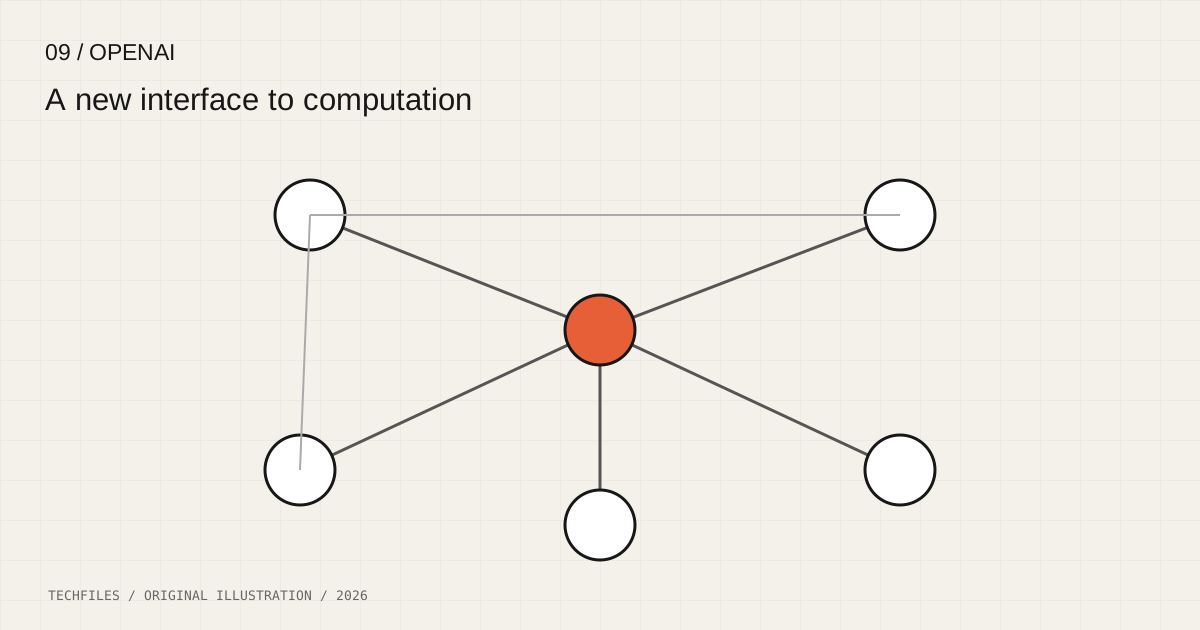
From research organisation to an everyday interface
OpenAI announced itself in December 2015 as a nonprofit AI research company. Its founding announcement framed the work around broad human benefit. On 30 November 2022, the introduction of ChatGPT placed a conversational interface in front of a much wider audience. These are historical milestones, not a complete description of the organisation's later structure or products.
The interaction mattered. Instead of choosing only from fixed menus, a person could describe a task in ordinary language, ask a follow-up and refine the result. The experience made capabilities accessible while also making fluent errors easy to mistake for knowledge.
The Story of OpenAI / The takeaway
The important shift is not that a conversation guarantees understanding. It is that language becomes a flexible interface to computation. That flexibility changes how users specify work, but it does not remove the need to check outcomes.
A useful evaluation begins with a concrete task and an independent way to judge the result. For a calculation, recompute it. For a factual statement, inspect a source. For a code change, examine the diff and run an appropriate check.
Our editorial view is that the most productive relationship with these systems combines experimentation with evidence. A convincing answer is a proposal. What makes it dependable is the work of verification around it. This issue deliberately avoids rankings, model promises and speculative claims about where the organisation will be next.
Read the source
How Indian Startups Are Changing Technology
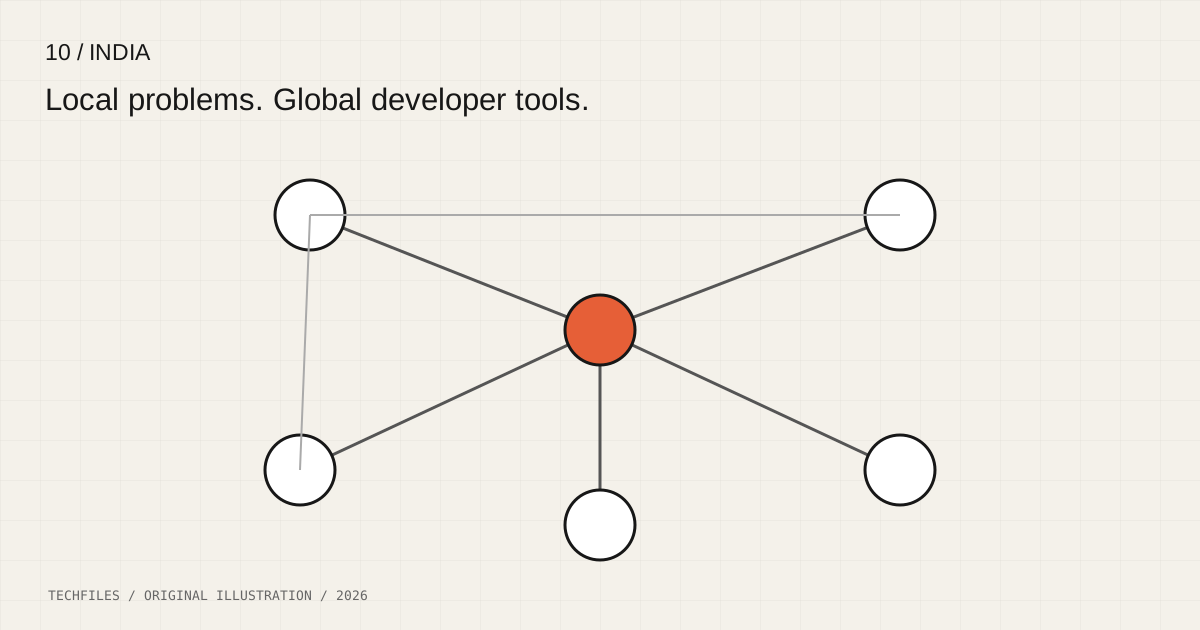
Developer experience as an export
India's technology story is broader than one category or one city. Developer-facing products offer a useful lens because they turn a repeated technical inconvenience into something teams can reuse. Postman's own history describes a side project built to simplify API testing and a company founded in Bangalore. Razorpay describes its work around payments and developer-friendly integration.
Those examples address different problems, but share a useful starting point: a specific workflow that can be made easier. An API client and a payments integration become valuable when their documentation, error messages and defaults help someone complete real work.
How Indian Startups Are Changing Technology / The takeaway
This is not a claim that all Indian startups share one strategy, or that startup success measures a country's entire technical contribution. Services firms, public infrastructure, researchers, maintainers and independent builders also shape the ecosystem.
Our interpretation is that local experience and global usefulness can reinforce one another. A founder close to a recurring problem may understand details that an abstract market category misses. The resulting product still has to earn trust through reliability and support.
For a student or independent developer, the actionable lesson is encouragingly small: document one frustrating task you repeat, observe someone else doing it and remove one point of confusion. A useful first product does not need to represent a whole industry. It needs to help a particular person finish a particular job.
Read the source
Part two / The workshop
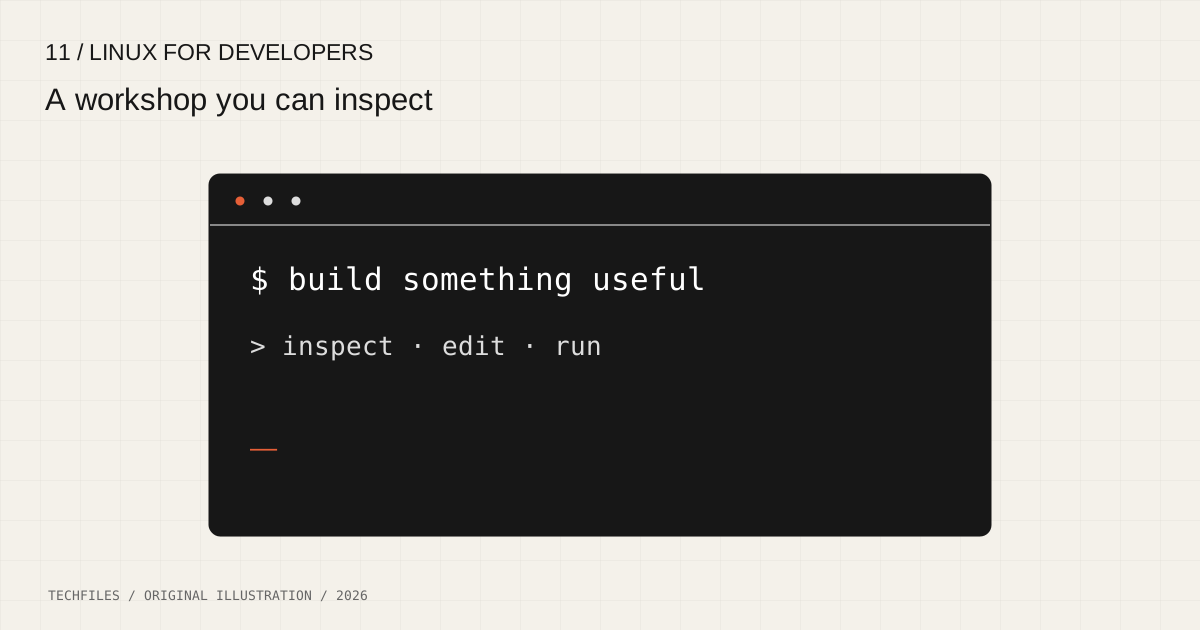
Developer Culture & Programming
Ten stories about how software is built. Learn the boundaries, inspect the tools and make one small experiment of your own.
Why Do Developers Love Linux?
Visibility, composability and a familiar deployment environment
Linux is not a universal preference, and developers who use macOS or Windows are not less serious. Its appeal often comes from a working environment built around inspectable tools, automation and control. A shell command can become part of a script; a script can become a reproducible project workflow.
The kernel is only one part of that experience. Distributions assemble kernels, system utilities, package management and desktop choices into usable systems. The result is not one identical Linux experience. A small server installation and a graphical workstation can share foundations while making very different tradeoffs.
Why Do Developers Love Linux? / The takeaway
The most useful reason to learn Linux is not identity. It is understanding the environment where your software may run. File permissions, processes, logs and configuration become easier to debug when they are visible concepts rather than mysterious background behaviour.
Start in a safe practice environment and learn a few operations well: navigate directories, inspect a text file, identify a process and read a relevant log. Understand a command before using elevated privileges.
Our view is that choosing a development environment should reduce friction for the work at hand. If your present system already does that, you do not need to replace it to belong. Learn transferable concepts first; operating-system preferences can follow actual needs instead of becoming an entrance exam for programming.
Read the source
What Makes Rust Different?
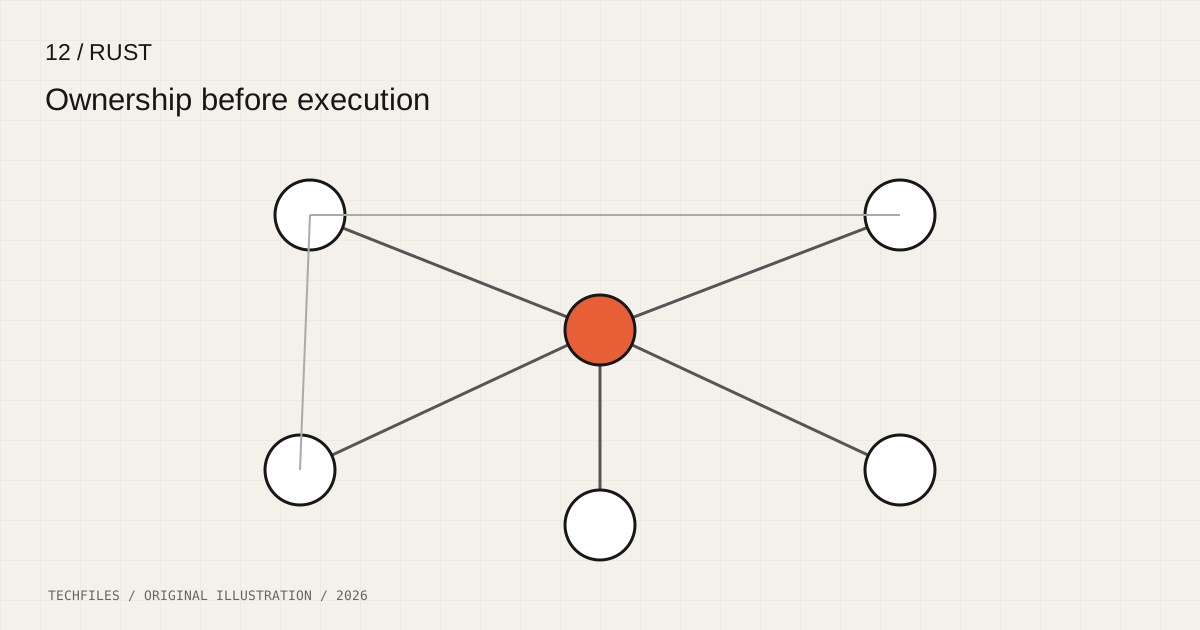
Ownership makes a promise the compiler can inspect
Rust's ownership system is a way to manage memory through rules checked by the compiler. Values have owners; borrowing lets code use a value without taking ownership. These rules can prevent many memory-safety mistakes in safe Rust without requiring a tracing garbage collector.
That benefit is not the same as proving that an application has no bugs. Unsafe code, foreign-language interfaces, logical errors and resource misuse still require care. The language changes which problems the compiler can help you catch; it does not remove the need to design and test the program.
What Makes Rust Different? / The takeaway
For a learner, the first challenge is often explaining lifetimes and access more precisely than another language required. That friction can feel like the compiler is resisting an obvious idea. Sometimes the better question is whether the code's ownership story is actually clear.
Try a tiny exercise before adopting Rust for a large project: create a value, move it into a function, then observe which later use the compiler rejects. Next borrow it instead. The difference is easier to grasp through one concrete value than through a page of terminology.
Our editorial take is that Rust is particularly interesting when explicit resource reasoning is part of the job. Its advantages should be weighed against your team's experience, interoperability requirements and the cost of a rewrite—not treated as a reason to replace every working program.
Read the source
How Git Actually Works
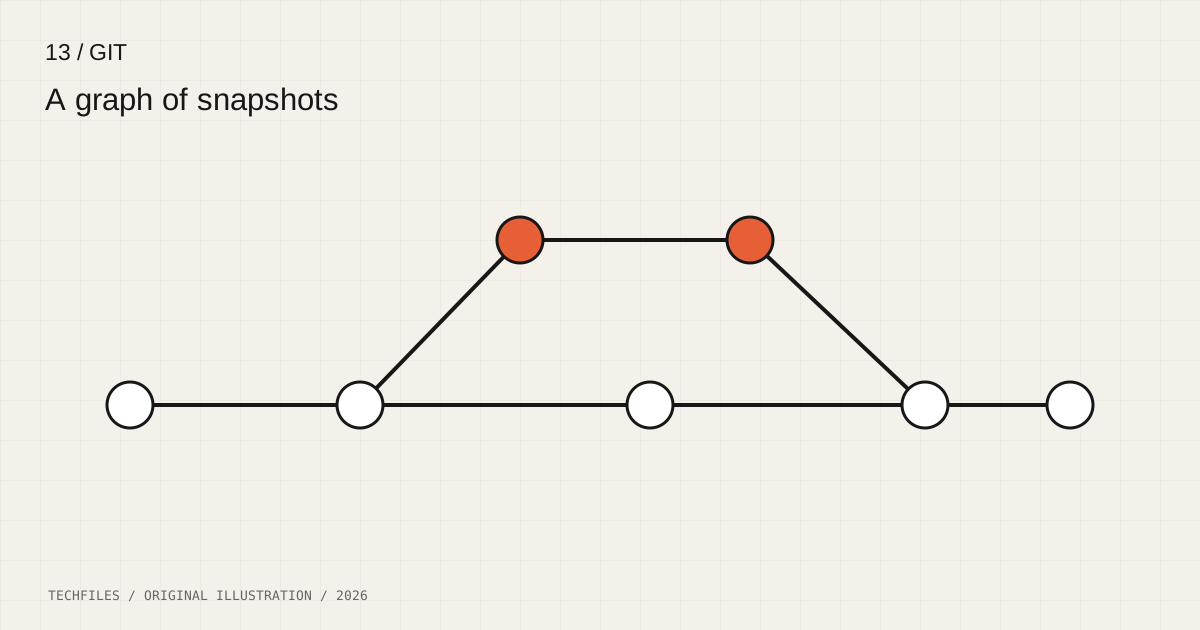
Objects, references and a graph of history
Git records project snapshots using an object database. File contents are represented by blob objects; tree objects describe names and directory structure. A commit points to a tree and records metadata plus its parent commit or commits. Branch names are references that move as history advances.
This is why the graph matters. Two branches can share ancestors, diverge and later be joined. A merge commit records multiple parents. Git is not merely appending lines to a chronological document; it is preserving a structure that describes how versions are related.
How Git Actually Works / The takeaway
A content-addressed system gives objects identifiers derived from their contents, but a commit ID should not be mistaken for proof that a change is good or authorised. Provenance and review need additional processes.
The staging area is where this internal model becomes practical. It describes the tree you intend to commit next, which may differ from the files currently open in your editor. Staging deliberately is therefore a design activity: you are choosing the boundaries of a change.
A useful experiment is to make a small repository, stage one file and inspect git diff --staged before committing. Then edit it again. Seeing two versions of the same path in the working and staged states often explains more than memorising a dozen commands. The companion Git note in this issue includes the full exercise.
Read the source
The Story Behind VS Code
A lightweight editor with room to grow
Visual Studio Code sits between a plain text editor and a large integrated development environment. Its appeal is not that every capability is built into one fixed interface. Extensions and language tooling let the workspace adapt to different projects. The November 2015 release notes mark the move to open-source development on GitHub and the introduction of extensibility.
The editor and its surrounding ecosystem should also be distinguished. The source project, Microsoft's distributed product and individual extensions can have different terms and behaviour. Installing an extension is a separate decision about code that runs in your development environment.
The Story Behind VS Code / The takeaway
The platform lesson is about a strong centre with useful seams. An editor can keep a recognisable core while allowing language services, debuggers and project tools to attach around it. That flexibility creates an ecosystem, but also gives users a new maintenance task.
Try auditing your own extension list. Which tools do you actually use? Which duplicate a capability? Which have access to a remote account or execute project commands? Fewer well-understood extensions can be easier to maintain than an impressive collection.
Our view is that a good editor makes the next useful action easy without hiding what it does. Choose it by the clarity of your daily workflow, the quality of language support and the accessibility of its interface—not by a contest over which tool makes someone a real developer.
Read the source
Why Developers Are Switching to Neovim
An attractive workflow, not a measured universal migration
The title describes a visible interest, not proof that most developers are abandoning another editor. Neovim offers a highly extensible Vim-based environment, with Lua configuration, an API and language-server integration. Modal editing separates different kinds of interaction, turning repeated edits into a vocabulary of actions and motions.
That vocabulary can become powerful through practice. It can also be unfamiliar and costly to learn. The benefits depend on the user's tasks, preferences and willingness to maintain an environment. A minimal screen is not automatically a minimal setup burden.
Why Developers Are Switching to Neovim / The takeaway
Before rebuilding your whole workstation around someone else's configuration, try one small workflow. Open a disposable text file, learn how to enter and leave insert mode, move by words, undo an edit and quit. The tutorial supplied with the editor is a better starting point than a large plugin bundle.
Next, decide which additional capability you genuinely miss. Add one thing, understand how it is configured, and keep the configuration under version control.
Our editorial view is that Neovim rewards an interest in editing as a programmable activity. That is a good reason to explore it. It is not a reason to dismiss graphical interfaces, accessibility needs or a teammate's existing setup. Productivity is the work completed with confidence, not the number of keys someone avoids pressing.
Read the source
What Happens When You Compile Code?
A pipeline of representations
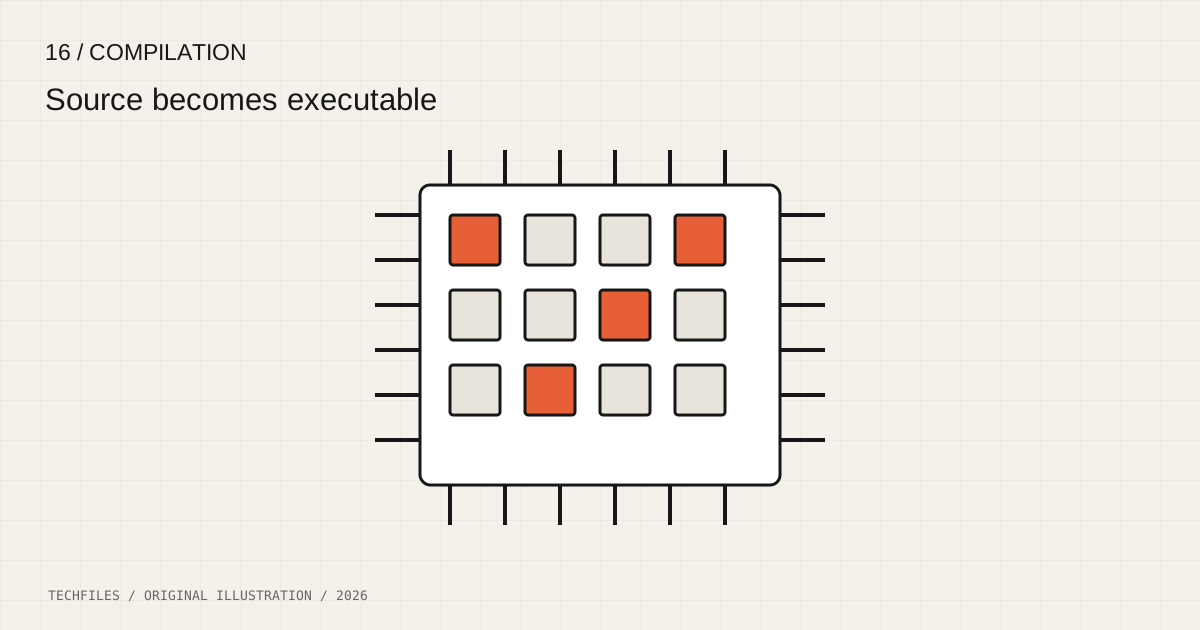
Compilation translates a program through representations that tools can analyse and transform. In a typical C-family toolchain, preprocessing handles directives, parsing establishes structure, semantic analysis checks meaning, and code generation produces lower-level output. Assembly and linking turn the pieces into something the target environment can load. Clang documents these as distinct stages of a larger toolchain.
Not every language follows the same route. Some environments interpret code, use bytecode or compile parts while a program runs. Even in one toolchain, optimisation and target choices change the work performed between source and execution.
What Happens When You Compile Code? / The takeaway
Understanding the stages makes errors less mysterious. A syntax error belongs to a different part of the pipeline from an unresolved symbol during linking. A program that builds successfully can still fail when it runs. Those are different questions requiring different evidence.
Try a small observation exercise: compile a one-function C program with options that stop after preprocessing, assembly generation and object generation. Compare the outputs. Do this in a practice directory and consult your compiler's manual for the exact flags.
Our view is that the pipeline is useful even when you never write a compiler. It teaches a debugging habit: identify which transformation failed, inspect its input and avoid applying a fix from a different layer. Clear boundaries make complex systems easier to reason about.
Read the source
How Operating Systems Work
A shared machine needs rules
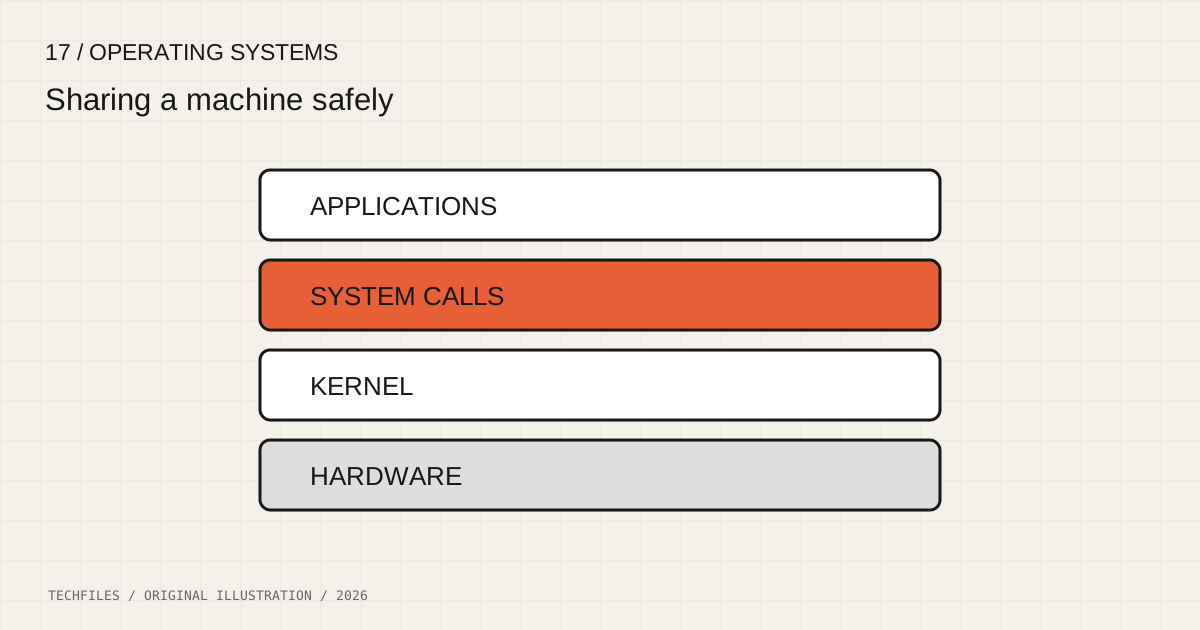
An operating system makes hardware usable by multiple programs while managing the boundaries between them. Its kernel coordinates resources such as processor time, memory and devices. Programs request services through controlled interfaces rather than directly owning the whole machine.
Virtual memory is a useful example. A process sees an address space, while the operating system and hardware manage how those addresses relate to actual memory. This supports isolation and flexibility, though it is not a magical guarantee against every software or hardware vulnerability.
How Operating Systems Work / The takeaway
Think about opening a document while music plays and a download continues. Each task behaves as though it has room to work, but they share finite resources. Responsiveness depends on scheduling, input/output and memory decisions as well as application code.
For a developer, this changes the way a slow program should be investigated. Is it using processor time, waiting for data, consuming too much memory or contending for a resource? A single observation such as a frozen window rarely answers that question.
Our interpretation is that operating-system literacy begins with asking better questions about ordinary behaviour. Watch one process in a system monitor, inspect its memory use and notice what happens when it waits on a file. A small, visible experiment is often a better teacher than treating the whole kernel as one opaque box.
Read the source
The Rise of AI Coding Agents
The unit of assistance becomes a task
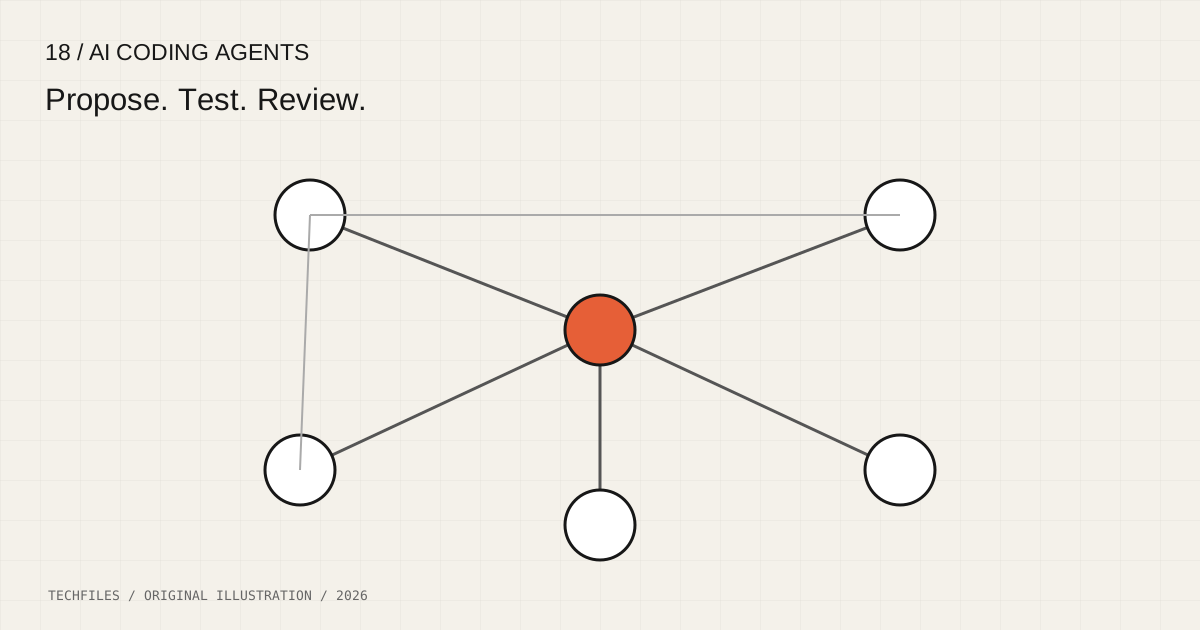
A coding assistant can suggest a line. A coding agent can be given a bounded task, inspect a repository, change files and run tools toward a result. GitHub's documentation describes agent workflows that can produce changes for review, and the boundary between authoring and checking becomes especially important.
This is a workflow shift rather than proof of autonomous correctness. Tools can fail, tests can be incomplete and a plausible patch can solve the wrong problem. Giving software the ability to act makes scope, permissions and observable outcomes part of the design.
The Rise of AI Coding Agents / The takeaway
A strong task names the desired behaviour, the constraints and the way success can be checked. For example: fix a specific validation bug, preserve the public API and demonstrate the failing case. That gives both a person and an agent a concrete target.
Review the diff before accepting the result. Check whether new dependencies, network calls or data handling were introduced. Run checks appropriate to the behaviour, and inspect anything the tests cannot establish.
Our view is that the most valuable skill is not inventing a perfect magic prompt. It is converting an intention into a reviewable change. Agents can reduce the effort of producing a candidate solution. Responsibility for deciding whether that solution belongs in a real system still needs an owner.
Read the source
Why Open Source Software Matters
Access to code is only the beginning
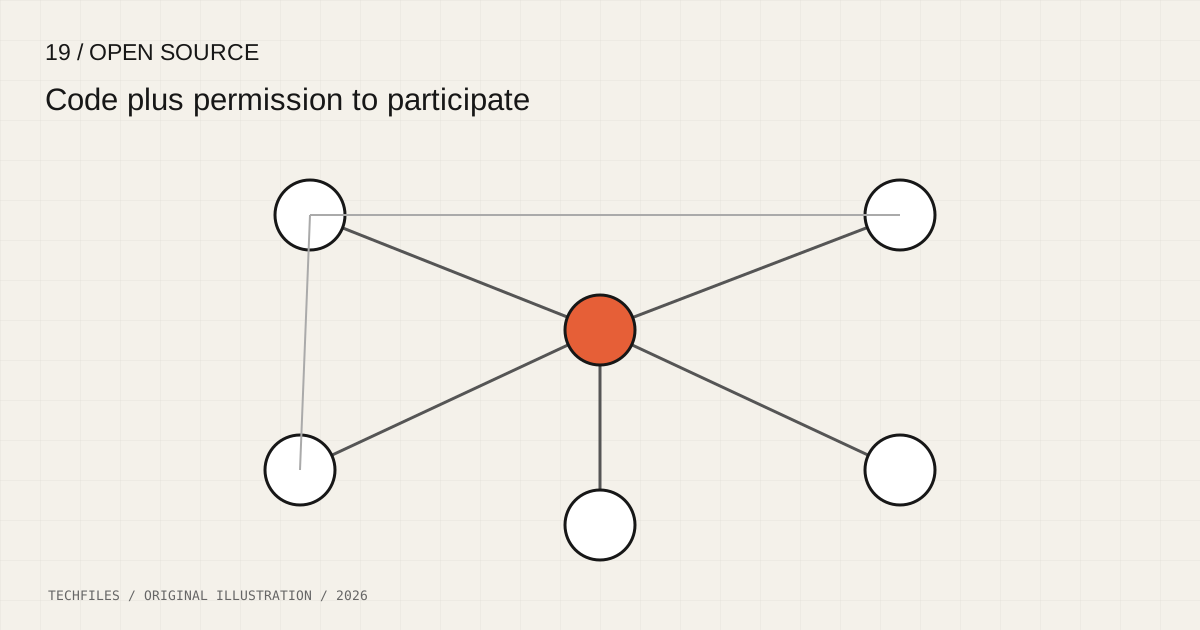
Open source is about licence-granted permissions, not simply a repository that can be viewed. The Open Source Definition sets conditions concerning redistribution, source code and derived works, among other requirements. Different compliant licences express different obligations. Public visibility alone does not automatically give permission to reuse a project however you like.
Those permissions allow people and organisations to inspect, adapt and share software within the applicable terms. The technical benefit is accompanied by a social one: improvements can be discussed around an inspectable artefact rather than only requested through a closed product roadmap.
Why Open Source Software Matters / The takeaway
Shared code still needs sustained work. Fixing regressions, answering reports, reviewing patches and preparing releases take time. A widely used project is not necessarily well-funded, and a contribution is not useful merely because it adds lines.
Start by reproducing one issue, improving a confusing instruction or writing a small test. Read the contribution guide and respect the maintainer's scope. If the project supports your business, consider how the business can support its maintenance.
Our view is that open source matters because it creates options: to learn, to verify and, when permitted, to continue building. Those options are strongest when participation is responsible. Read the licence, understand the dependency and treat the people maintaining it as collaborators rather than an unlimited support service.
Read the source
Can You Build an Operating System From Scratch?
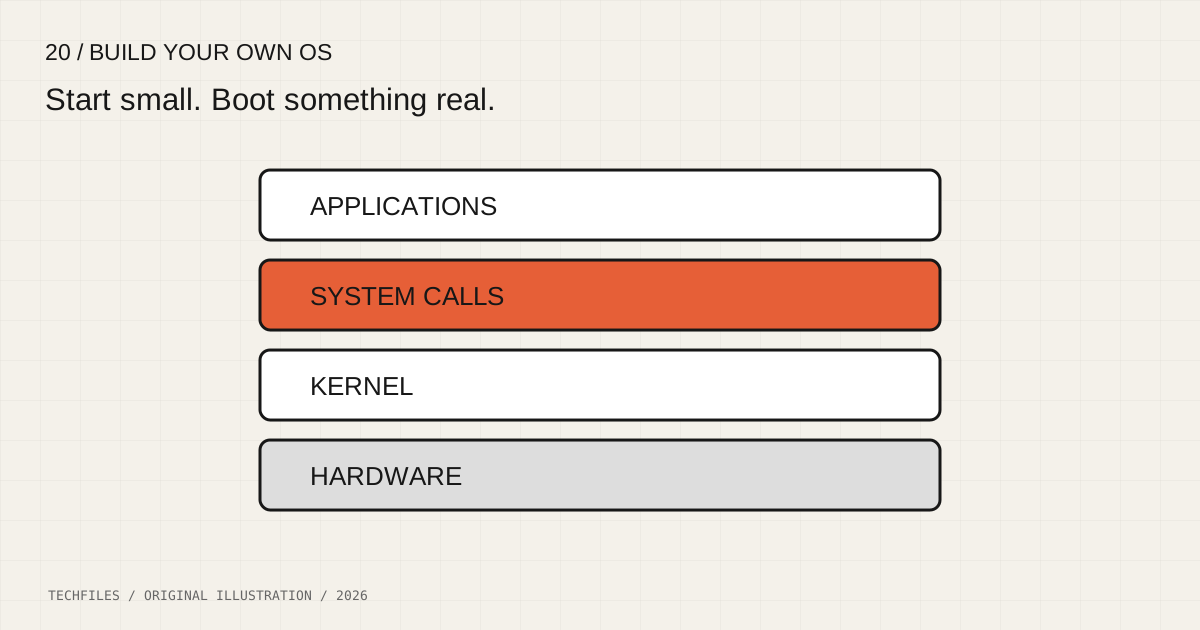
Yes—if the first goal is small enough
A small educational kernel is within reach of a patient learner. A complete everyday operating system is a much larger undertaking involving drivers, filesystems, networking, security, tools and long-term maintenance. The phrase from scratch should therefore be unpacked: most learning projects still rely on a compiler, emulator, boot conventions and existing documentation.
Philipp Oppermann's Writing an OS in Rust is one structured route through a small kernel. Its scope makes the engineering concepts approachable without pretending that the first successful boot is equivalent to a production desktop system.
Can You Build an Operating System From Scratch? / The takeaway
Choose a first milestone you can recognise: boot in an emulator and display a message. Keep the experiment separate from the system you depend on. Then learn interrupts, memory management and simple allocation one step at a time.
Write down what each layer assumes about the previous one. When the kernel stops responding, that notebook can be as useful as a debugger. A successful project includes an explanation of why the machine behaved as it did, not only a screenshot showing that it booted once.
Our closing view is that ambitious systems become learnable through small, testable boundaries. You do not have to replace a commercial operating system to learn from building one. A tiny machine that you understand can be a more valuable result than a large collection of copied code.
Read the source
Source desk / Platforms
Primary documentation and historical records. These links support the factual discussion; the takeaways are Techfiles editorial interpretation.
How Apple Changed Personal Computing
How Google Became the Internet's Gateway
How Microsoft Lost and Regained Its Position
How WhatsApp Became a Global Communication Platform
How Indian Startups Are Changing Technology
Illustrations: Techfiles, 2026. Designed for this issue; no endorsement by the companies or projects is implied.
Source desk / The workshop
Primary documentation and historical records. These links support the factual discussion; the takeaways are Techfiles editorial interpretation.
Why Developers Are Switching to Neovim
What Happens When You Compile Code?
Why Open Source Software Matters
Can You Build an Operating System From Scratch?
Illustrations: Techfiles, 2026. Designed for this issue; no endorsement by the companies or projects is implied.